I was taught to consider "evil" all those who spoke out against the tradition in which I was raised. To look on them with a mixture of pity and hate.
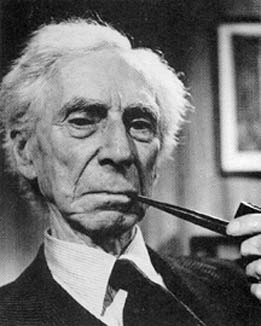
I found Russell's "Why I am not a Christian" when I was in high-school, and promptly assigned him to my growing blacklist. I found his arguments to be outrageous. I decided, almost immediately, that they were juvenile, inflammatory, and empty.
Of course, they aren't. They are, for the most part, compelling. They do still prickle my skin, simply by being polemics aimed at the heart of my mind -- however, he himself has since been granted (by whom?) a pardon. His horns have fallen off. I've read a bit of a biography of his childhood as well as bits of other works, and they've convinced me of his sincere desire to believe what he feels are honest and justifiable things to believe.
"Why I'm not a Christian" ends by advocating the leaving-off of dogmas -- "A good world needs knowledge, kindliness, and courage; it does not need a regretful hankering after the past or a fettering of the free intelligence by the words uttered long ago by ignorant men," Russell says.
20 years later, in the middle of the second world war, Russell finished writing his History of Western Philosophy, with the help of his wife Patricia (who did most of the research for him). The issue of dogma factors heavily in this work as well. Dogma is on one end of the pendulum swing that Western Philosophy has been beating out since the beginning -- the other is Science. The No Man's Land between the two is Philosophy -- "something intermediate between Theology and Science."
All definite knowledge ... belongs to Science; all dogma as to what surpasses definite knowledge belongs to Theology. ... Almost all the questions of most interest to speculative minds are sych as science cannot answer, and the confident answers of theologians no longer seem so convincing as they did in former centuries.
He lists a series of unanswerable questions, questions that require dogmatic belief, or ... philosophy. He asserts that this book will be the answer to the question of why, historically, philosophy has bothered to ponder these unanswerable questions. Action depends on belief, and to understand why people acted the way they did, is to understand, in part, what they believed.
Science tells us what we can know -- not much -- and Theology purports to fill in the rest. Russell clearly doesn't appreciate this gesture. He would rather live bravely through the uncertainty he believes himself to be in, but "it is not good either to forget the questions that philosophy asks..."
To teach how to live without certainty, and yet without being paralyzed by hesitation, is perhaps the chief thing that philosophy, in our age, can still do for those who study it.
Russell then proceeds to give us the brief outline of history, through this oscillation-lens. He links to dogma any sort of cultural tradition that unites a people in a unified belief -- thus creating civilization of some sort -- and to science he ties any individualism or free-minded exploration of the world that tends to dissolve societal bonds. The cycle of history, according to Russell, follows this track, back and forth, rigid tradition to a relaxation to the beginnings of free-minded genius, to dissolution, to tyranny, whereby a new tradition is instituted ...
Russell ends his introduction with a rally-cry quite similar to that of "Why I am not..." His vision of a brighter future, in this instance, comes under the title of "Liberalism":
The doctrine of liberalism is the attempt to escape this endless oscillation [the one I've illustrated for you above.] The essence of liberalism is an attempt to secure a social order not based on irrational dogma, and insuring stability without innvolving more restraints than are necessary for the preservation of the community. Whether this attempt can succeed...
...only the future can determine.

Wednesday, July 16, 2008

Tuesday, July 15, 2008
One of a Kinds
The ones
who each think
that they are the one
not of, but distinct
from the kind.
They are right --
for the kind know
it's wrong to seem
to themselves as anything
but the one who is
very much like
every other.
To say "I like you"
is to make this claim.
who each think
that they are the one
not of, but distinct
from the kind.
They are right --
for the kind know
it's wrong to seem
to themselves as anything
but the one who is
very much like
every other.
To say "I like you"
is to make this claim.
Friday, July 11, 2008
"Thoughts that are at peace"
When you find yourself awake at 1 am charting the events of the 16th century, you should ask yourself: Am I insane? Am I doing this out of anxiety, or pride, or because of strange love?
I'll agree with Wittgenstein, who was in turn agreeing with a great many philosophers before him, starting with Socrates, who first said: The goal of philosophy is thoughts that are at peace.
That is, the product of loving wisdom is thoughts that are at peace. Wisdom is -- so the cliche goes -- knowing that you don't know much. Loving wisdom -- that is: humbly observing and meditating on the world and its ways because you just want to, that is: philosophy -- is the process of untangling what you think you know and why you think you know it. It is therapeutic. It is freeing oneself, and humbling oneself, at the same time.
Knowledge is what we call our belief concerning the experiential relationship between ourselves and the world. It is a relationship. Certainty is the name of a feeling we have about that relationship. It is not the result of mathematical deduction. One becomes more or less convinced that what one says about the relationship between oneself and the world is an accurate way of saying it.
I for one am glad for the few simple human dogmas we all, or nearly all, share: 1. That we are existing in a world (I've never met or heard of someone not considered crazy who did not act on this belief) (if you say "Buddhism" I say read the story of Siddhartha's enlightenment, and think on the significance of the way he comes to it) (If you say George Berkeley, I say that saying that the world is actually there or saying that it is just perceived aren't really different, practically speaking) 2. That the world, existing outside of us, is governed by laws that we perceive, not that we create. 3. That reflecting on and talking about our relationship to the world, revering the existence of and power of objective reality, is a good thing: Sursum Corda -- lift up your heart.
To that end, some stay up late charting the centuries, mulling over the course of human thought and action. We are strange creatures -- strange that it fills me with feelings of wonder and of its strangeness -- strange compared to what?
I think it is strange compared to what I once thought of being human. Which wasn't much -- not much thinking, that is. Or, thinking that happened behind many veils.
So, to get to my purpose: I am reading Betrand Russell's "History of Western Philosophy" and will be doing little summaries of the chapters here, for my own benefit. I have an awful memory. Fixing this online, forever!, will be helpful for me, and maybe also for anyone else who happens to stumble upon it, and doesn't have the time to read the actual 800 page text.

I'll agree with Wittgenstein, who was in turn agreeing with a great many philosophers before him, starting with Socrates, who first said: The goal of philosophy is thoughts that are at peace.
That is, the product of loving wisdom is thoughts that are at peace. Wisdom is -- so the cliche goes -- knowing that you don't know much. Loving wisdom -- that is: humbly observing and meditating on the world and its ways because you just want to, that is: philosophy -- is the process of untangling what you think you know and why you think you know it. It is therapeutic. It is freeing oneself, and humbling oneself, at the same time.
Knowledge is what we call our belief concerning the experiential relationship between ourselves and the world. It is a relationship. Certainty is the name of a feeling we have about that relationship. It is not the result of mathematical deduction. One becomes more or less convinced that what one says about the relationship between oneself and the world is an accurate way of saying it.
I for one am glad for the few simple human dogmas we all, or nearly all, share: 1. That we are existing in a world (I've never met or heard of someone not considered crazy who did not act on this belief) (if you say "Buddhism" I say read the story of Siddhartha's enlightenment, and think on the significance of the way he comes to it) (If you say George Berkeley, I say that saying that the world is actually there or saying that it is just perceived aren't really different, practically speaking) 2. That the world, existing outside of us, is governed by laws that we perceive, not that we create. 3. That reflecting on and talking about our relationship to the world, revering the existence of and power of objective reality, is a good thing: Sursum Corda -- lift up your heart.
To that end, some stay up late charting the centuries, mulling over the course of human thought and action. We are strange creatures -- strange that it fills me with feelings of wonder and of its strangeness -- strange compared to what?
I think it is strange compared to what I once thought of being human. Which wasn't much -- not much thinking, that is. Or, thinking that happened behind many veils.
So, to get to my purpose: I am reading Betrand Russell's "History of Western Philosophy" and will be doing little summaries of the chapters here, for my own benefit. I have an awful memory. Fixing this online, forever!, will be helpful for me, and maybe also for anyone else who happens to stumble upon it, and doesn't have the time to read the actual 800 page text.
Thursday, August 30, 2007
A Difficult Grace
I've been reading the essays of Michael Ryan, one of the professors of poetry here at UCI. Which is an interesting title, I've always thought - professor of anything. A public declaration of your expertise in a field, apparently, from the Latin verb "profitieri".
Anyway, his essays, as Pinsky tells us on the front cover blurb, are "crisp, passionate, and learned." I like "learned", thanks Bob.
Crisp, though, yes, they are crisp. They slice well. Many of them are short, and full of clear expressions of a simple philosophy of poetry, form and purpose.
Anyway, his essays, as Pinsky tells us on the front cover blurb, are "crisp, passionate, and learned." I like "learned", thanks Bob.
Crisp, though, yes, they are crisp. They slice well. Many of them are short, and full of clear expressions of a simple philosophy of poetry, form and purpose.
Tuesday, May 29, 2007
This Mortal Coil
This blog has been on hiatus again. It seems to happen for a few months, every few months. It usually corresponds to some new swing of thought and action -- in this case, a series of actions, that led to a series of thoughts, that led to the neglecting of this blog.
I've been reading Shakespeare, and Hass, and Heidegger -- that is The Poet, a poet, and a poet-philosopher. I am thinking about Hamlet, and that too much introspection becomes inaction. As Coleridge says, "I have a smack of Hamlet myself, if I may say so."
You may.
I've been reading Shakespeare, and Hass, and Heidegger -- that is The Poet, a poet, and a poet-philosopher. I am thinking about Hamlet, and that too much introspection becomes inaction. As Coleridge says, "I have a smack of Hamlet myself, if I may say so."
You may.
Wednesday, March 21, 2007
Anamnesis
I found some previously unpublished blogs, sitting in draft-form in the "Edit posts" section -- this one from early 2007 (about Anamnesis -- the process (to state it simply) of remembering what you have forgotten) (So strange to think about the history of your own psyche) :
"It's that time again - cycle, cycle, cycle - wheel of time churns its melancholy way, me hog-tied to a cross beam, coming up for air.
Asleep in the water, bewildered in the light.
Shall I make written language the memory I don't have? Shall I correspond with the visible - make symbols for the abstract concepts in my head?
The answer to that question is yes. Yes I will do this, having found it the best way to maintain the livelihood of the eternalhoodness of my head. That is, keep the body in step with the "me" that has been a-ponderin for some years now, gnawing at its favorite bone, but forgetful. Forgetting everything it loves, always - its okay. We start again.
Principal #1: Express the yet-unexpressed intuitions of the world and its loveliness.
Principal #2: Wholeness and soundness of being.
Principal #3: Be still and know the voice, the hand, the shepherd. Know the worlds Maker as best as you can, and let the goodness of that knowing change the way you talk and step.
Principal #4: Don't ever hesitate to say what you mean, regardless of what nonsense it seems to be.
Principal #5: Don't try to sound cool. Don't try to be sexy. Don't believe the sugar-lie.
The Sugar-lie? Thus: the lie my body believes, told to it by sweet sweet voices, that hunger must be filled immediately. It must not necessarily. Maybe not evil to fill it -- what is the definition of evil? Who defines evil? Say God, yes, but how do you know what God says? Who made you Lord over the world's knowledge?
All of the symbols of my life stand before me mute, waiting for the signal. I have none. I am listening to Gorecki's 3rd symphony, and I have none. I am holding up a finger.
"It's that time again - cycle, cycle, cycle - wheel of time churns its melancholy way, me hog-tied to a cross beam, coming up for air.
Asleep in the water, bewildered in the light.
Shall I make written language the memory I don't have? Shall I correspond with the visible - make symbols for the abstract concepts in my head?
The answer to that question is yes. Yes I will do this, having found it the best way to maintain the livelihood of the eternalhoodness of my head. That is, keep the body in step with the "me" that has been a-ponderin for some years now, gnawing at its favorite bone, but forgetful. Forgetting everything it loves, always - its okay. We start again.
Principal #1: Express the yet-unexpressed intuitions of the world and its loveliness.
Principal #2: Wholeness and soundness of being.
Principal #3: Be still and know the voice, the hand, the shepherd. Know the worlds Maker as best as you can, and let the goodness of that knowing change the way you talk and step.
Principal #4: Don't ever hesitate to say what you mean, regardless of what nonsense it seems to be.
Principal #5: Don't try to sound cool. Don't try to be sexy. Don't believe the sugar-lie.
The Sugar-lie? Thus: the lie my body believes, told to it by sweet sweet voices, that hunger must be filled immediately. It must not necessarily. Maybe not evil to fill it -- what is the definition of evil? Who defines evil? Say God, yes, but how do you know what God says? Who made you Lord over the world's knowledge?
All of the symbols of my life stand before me mute, waiting for the signal. I have none. I am listening to Gorecki's 3rd symphony, and I have none. I am holding up a finger.
Monday, March 12, 2007
Objectivism
Ayn Rand, your spirit hovers over these american waters. Since Atlas shrugged, many of us have been following suit. I'm not sure what it was that makes me hate you so much. I think that it's because, like everyone, you failed to say the truth, the whole truth, and nothing but. And you wouldn't admit having failed.
Of course, I have figured it all out. All of the unfitting pieces of your systematic assembly of the puzzle of existence I have removed and filled the gaps with light. You left me your mantle like Elijah, and I've cut it to pieces, patched it into sails, tried to catch the wind.
The world exists. In this we agree, apparently. Knowledge is a relationship to this actual existent and orderly world. Yes, this order that we perceive hovers between two layers of flux - our minds and mystic fields of energy - yet it exists.
Certainty is a feeling about the relationship of our minds to this world. Concepts, we agree I think, are abstractions of perceived objects and their relationships - or that language, the ability to perceive ourselves lucidly and conceptualize and step back and speak, is grounded in things. So if there was a chain, our minds perceive things and relations between things, and this is grounds for language, symbol for thing, which causes communication, which causes the ability to abstract, which causes language about abstractions, which causes self-awareness, which I have right now. I am aware of my flesh in a tilting chair in Irvine, CA (we give names to geographical locations!) (language is beautiful) and I am aware that I am aware, and it allows me to circle around myself as I speak, to check myself, to say to self:
"Self, as ye listen to Thomas Tallis' lovely ancient music through two ear buds sucking electronic juice through long black root to release wave-sound-scent into your head's chambers remember that ye are capable of commiting the sins of your foremother, our dearly beloved Aynnie Randoferous. You are capable of speaking too soon and saying a dishonest word. You are capable of flinging words unwinged out of the nest, and they will fall hard to the real ground. Self, come to me, let me hold you, let me kiss you, yes, we are crazy, but it is the kind of craziness I desire, the kind that does not hide from itself, that kind that stands willingly in the hard light of the world, not even turning from the hope that is here, not even turning from the happiness of it. "
Of course, I have figured it all out. All of the unfitting pieces of your systematic assembly of the puzzle of existence I have removed and filled the gaps with light. You left me your mantle like Elijah, and I've cut it to pieces, patched it into sails, tried to catch the wind.
The world exists. In this we agree, apparently. Knowledge is a relationship to this actual existent and orderly world. Yes, this order that we perceive hovers between two layers of flux - our minds and mystic fields of energy - yet it exists.
Certainty is a feeling about the relationship of our minds to this world. Concepts, we agree I think, are abstractions of perceived objects and their relationships - or that language, the ability to perceive ourselves lucidly and conceptualize and step back and speak, is grounded in things. So if there was a chain, our minds perceive things and relations between things, and this is grounds for language, symbol for thing, which causes communication, which causes the ability to abstract, which causes language about abstractions, which causes self-awareness, which I have right now. I am aware of my flesh in a tilting chair in Irvine, CA (we give names to geographical locations!) (language is beautiful) and I am aware that I am aware, and it allows me to circle around myself as I speak, to check myself, to say to self:
"Self, as ye listen to Thomas Tallis' lovely ancient music through two ear buds sucking electronic juice through long black root to release wave-sound-scent into your head's chambers remember that ye are capable of commiting the sins of your foremother, our dearly beloved Aynnie Randoferous. You are capable of speaking too soon and saying a dishonest word. You are capable of flinging words unwinged out of the nest, and they will fall hard to the real ground. Self, come to me, let me hold you, let me kiss you, yes, we are crazy, but it is the kind of craziness I desire, the kind that does not hide from itself, that kind that stands willingly in the hard light of the world, not even turning from the hope that is here, not even turning from the happiness of it. "
Monday, January 29, 2007
Thread of the Amnesiac
The thread often slips. I try
to keep it clasped tight between my pincers
through the long-winded goose
chasing. I fail.
Even in this moment as I clatter backwards
on all fours recounting
all of the ways I have fallen short – all of the music
I began, with what heat!, and promptly cut off cold
turkey. Oh, I’m sorry, yes,
an accident of course, just
slipped my mind. Socrates
stood motionless for days on end
to keep a palsied grip on the kite’s
elusive tail that whips up sometimes, pulls taut, 80 degrees
skyward, significant
I’m telling you, easy to follow.
We get this hallowed sense of self, religious
inflation, which, in the course of things, is lost
when the kite dips and the rope
goes limp,
and I’m left alone
in one place, trying to re-collect the story,
trying to patch together clues
to my amnesiac life, amidst a rabble
of circumstantial evidence, and this ridiculous
rope strung backwards through time,
tied always - strange now that I think of it -
to the successive images of me.
to keep it clasped tight between my pincers
through the long-winded goose
chasing. I fail.
Even in this moment as I clatter backwards
on all fours recounting
all of the ways I have fallen short – all of the music
I began, with what heat!, and promptly cut off cold
turkey. Oh, I’m sorry, yes,
an accident of course, just
slipped my mind. Socrates
stood motionless for days on end
to keep a palsied grip on the kite’s
elusive tail that whips up sometimes, pulls taut, 80 degrees
skyward, significant
I’m telling you, easy to follow.
We get this hallowed sense of self, religious
inflation, which, in the course of things, is lost
when the kite dips and the rope
goes limp,
and I’m left alone
in one place, trying to re-collect the story,
trying to patch together clues
to my amnesiac life, amidst a rabble
of circumstantial evidence, and this ridiculous
rope strung backwards through time,
tied always - strange now that I think of it -
to the successive images of me.
Sunday, January 21, 2007
Vivaldi
all of the ways
that eagerness fails –
in the end. But do we ever have the end?
We have only now, this: mop of hair
on the Red Priest’s pate jouncing back and forth
to the cheerful cadence, raised arm
announcing each arriving beat.
We wait expectant for the bright descent –
for the opening of the next gate, ajar,
daylight betraying the world behind.
We follow the hand that runs from room to room
throwing wide the doors of the house.
Don’t try and explain away
the smile on Vivaldi’s face,
or mine. Let tomorrow worry
about itself.
Won’t eagerness wend its way off some distant cliff
of meaninglessness? Yes, and how the hell should I know.
Too many monolithic syllables in between.
And such delight in the next.
Such vivid delight in the next.
Monday, January 08, 2007
Arcangelo Corelli
Jumping back to one of Vivaldi's influences, Corelli's music sounds more like Scarlatti than the later more complex Baroque sound. Listening to his violin sonata opus 5.
He was born in Ravenna, which was one of my favorite stops in Italy when I went a couple years back. Lovely old Byzantine city, cobblestoned and courtyarded - home to San Vitale, an exceptionally beautiful Byzantine Basilica of the 6th century.
His melodies are clear and fluid. They are refreshing.
Click on Corelli's flowing mane to hear Concerti Grossi, Opus 6, no 8, allegro.

He was born in Ravenna, which was one of my favorite stops in Italy when I went a couple years back. Lovely old Byzantine city, cobblestoned and courtyarded - home to San Vitale, an exceptionally beautiful Byzantine Basilica of the 6th century.
His melodies are clear and fluid. They are refreshing.
Click on Corelli's flowing mane to hear Concerti Grossi, Opus 6, no 8, allegro.
Saturday, January 06, 2007
Mortaldi
Get it? "Viva" means "live" and "morte" means "die" so "mortaldi" would be... nevermind. This is the last day of Vivaldi's ornate moment in the spotlight. Listening to a random concerto for violin, strings, and the harpsichord right now. I read somewhere that the historical category of "baroque" as its own era is questionable because of the vast differences between early baroque, and late. I can hear them. Vivaldi was a bit of a jump into the mid to late baroque for me, and his music is quite different than Scarlatti's. Much more... classical - you know, complex and varied. Lots of tempo changes. Violins dancing around like fruit flies - the strings in the back like an industrious cityscape. Bom, bom, bom! (puffs of smoke) Scarlatti still had that careful, reserved simplicity of ye olden days.
As I listen, I'm prepping to jump back into the waters of Rhetoric and Critical Reading. Met my new class. They seem swell. Not so much in the swollen sense, as in the neat-o, allright.
As I listen, I'm prepping to jump back into the waters of Rhetoric and Critical Reading. Met my new class. They seem swell. Not so much in the swollen sense, as in the neat-o, allright.
Thursday, January 04, 2007
The Man and His Soul
The man sat next to his soul on the sofa touching it occasionally to see if its feeling would change from moment to moment. It did not. He only asked it questions when he became lonely. I would encourage those inclined to object to the ambiguity of the pronoun usage in this scene to remember that when I say "he" in any moment, it does not matter to whom I am referring - either way it is one and the same. The soul abstracts the man, as does the man, away from himself. They are, however, and ever will be, the same creature.
So, as I said, the soul asked questions to the man who touched, and he replied in kind with light and encouraging puffs of language. His sentences, it became clear, his words to himself, were wrapped about something.
This made the soul touch faster - the man began to ask his questions in rapid succession - poppop pop -like a derrick pumping oil, bad and noxious, from the world's snake bite wound. They watched his words unravel. Something was appearing. Loneliness evaporated into mystic glee. Harder and harder they went, language greased and gunning, and then
the thing itself revealed.
Was laid bare.
I saw it.
I was watching.
The man and the soul, however, had fallen asleep. Three times this happened. Before the fourth could find its culmination, the ground had taken back its own.
So, as I said, the soul asked questions to the man who touched, and he replied in kind with light and encouraging puffs of language. His sentences, it became clear, his words to himself, were wrapped about something.
This made the soul touch faster - the man began to ask his questions in rapid succession - poppop pop -like a derrick pumping oil, bad and noxious, from the world's snake bite wound. They watched his words unravel. Something was appearing. Loneliness evaporated into mystic glee. Harder and harder they went, language greased and gunning, and then
the thing itself revealed.
Was laid bare.
I saw it.
I was watching.
The man and the soul, however, had fallen asleep. Three times this happened. Before the fourth could find its culmination, the ground had taken back its own.
The Consolation of the Soul
After all the doors have had their handles
twisted off. After all the roads out to the lake
have been erased. (Leaving me stranded)
After we have stood and faced
what it is
that we aren't capable of calling you,
Soul, come, and sit with me.
I need an arm,
a bit of flesh,
to lean my weight upon.
You dont refuse an old man
it? A moment ago I was young
and building -
Then the raucous vacuum
came and orchestrated the renewal
of the dark. It meant to.
Oh, it feels that it meant to
do that to you.
Come, then, let me touch your face
so you can know
you are.
And we shall lean again into the wind -
Soul, do you hear me
calling down the funnel?-
the dark and ravishing wind.
twisted off. After all the roads out to the lake
have been erased. (Leaving me stranded)
After we have stood and faced
what it is
that we aren't capable of calling you,
Soul, come, and sit with me.
I need an arm,
a bit of flesh,
to lean my weight upon.
You dont refuse an old man
it? A moment ago I was young
and building -
Then the raucous vacuum
came and orchestrated the renewal
of the dark. It meant to.
Oh, it feels that it meant to
do that to you.
Come, then, let me touch your face
so you can know
you are.
And we shall lean again into the wind -
Soul, do you hear me
calling down the funnel?-
the dark and ravishing wind.
Wednesday, January 03, 2007
Viva Vivaldi
Buona vita nel'anno nouvo. Is that the way its said? I guess that would be saying that the good life, buona vita, is in, "inside of", nel, the new year. Which isn't what I meant, but sort of nice. Poetical. And thats my question. Does the poetical blurring of reality by language create some of the meta-substances we base so much of our lives on? I don't think so, but its a question anyway.
Vivaldi! He, formidable master of the Baroquean pitch, is the composer of the week. I've been listening to the Four Seasons, which you've heard nearly in entirety even if you think you haven't. La Stravaganza is next in the queue. His music feels like the Californian New Year: bright, busy, wealthy.
Vivaldi! He, formidable master of the Baroquean pitch, is the composer of the week. I've been listening to the Four Seasons, which you've heard nearly in entirety even if you think you haven't. La Stravaganza is next in the queue. His music feels like the Californian New Year: bright, busy, wealthy.
Come now, let us reason it together Soul
We must be frank,
for the days are short -
It being winter.
It being the climate.
It being the mustard sandwich
we wave when bereft at lunch
of the thing itself -
whatever we happen to be speaking of.
Soul? Are you my gesture's pith or sandwich?
That's not the question I brought you here to ask,
but it seems pertinent.
It seems like it will fit.
It always fits.
It was made to.
I'm asking: there's you, and there's your flesh -
in English, two extremities, and two hearts, composite
acting as the thing we wave
when we speak of you.
My lips, bread.
My tongue, processing meat -
I am waving myself out over the dark lake.
I am conversing of you.
With whom?
With whom?
------
dedicated to the Hofer
for the days are short -
It being winter.
It being the climate.
It being the mustard sandwich
we wave when bereft at lunch
of the thing itself -
whatever we happen to be speaking of.
Soul? Are you my gesture's pith or sandwich?
That's not the question I brought you here to ask,
but it seems pertinent.
It seems like it will fit.
It always fits.
It was made to.
I'm asking: there's you, and there's your flesh -
in English, two extremities, and two hearts, composite
acting as the thing we wave
when we speak of you.
My lips, bread.
My tongue, processing meat -
I am waving myself out over the dark lake.
I am conversing of you.
With whom?
With whom?
------
dedicated to the Hofer
What the Soul is making
In the mornings, over the stovetop.
With an arched neck,
lays an ear to the fleshy divet
between his chests pectoral lumps
and listens to the metronomic
drumbeat of blood.
Oh Soul, can't you see I'm dying
to know where it is you're making
your habitation?
(This is not about the beauty of the language!
Come out, my hands are clean!)
The soul remains quiet,
flexing in the dark
to whom I addressed my next question:
And what are you the lack of?
And why do I hate you so much?
The blood pumps.
A waft of pancake batter cooking lifts,
pungence of a morphic creature.
With an arched neck,
lays an ear to the fleshy divet
between his chests pectoral lumps
and listens to the metronomic
drumbeat of blood.
Oh Soul, can't you see I'm dying
to know where it is you're making
your habitation?
(This is not about the beauty of the language!
Come out, my hands are clean!)
The soul remains quiet,
flexing in the dark
to whom I addressed my next question:
And what are you the lack of?
And why do I hate you so much?
The blood pumps.
A waft of pancake batter cooking lifts,
pungence of a morphic creature.
Monday, January 01, 2007
Vegas
It means the meadows! I was thinking of warrior Amazon goddesses, not grasslands. Apparently it was named thus because the Spaniards who christened it found natural artesian springs as they passed through.
It was a clean place, and gracious.
It was a clean place, and gracious.
Ulysses and the New Year
I have just finished reading, here on this lovely and bright January the first of 2007, the opening chapter of James Joyce's Ulysses. It is, to be blunt, amazing. The last time that I can remember enjoying a bit of prose so much was my brief liaison with the journal entries of Gerard Manley Hopkins.
The syntax is a veritable freak show of perfection, the slipping between thought and dialogue smooth and sweet, and the characters livid with animation. Buck Mulligan is doing wonders for my heart.
This may be presumptuous, but if the first chapter is a clue, this book will be one of my favorites long before I reach its faraway final word. It is, after all, not in the least a short novel.
And the new year is here. As you might have induced from my last two poems, I spent some of it in the desert. Mojave National Preserve, 100 miles southwest of Satan's National Preserve. No, I'm not talking about Death Valley - that's 100 miles due north. I'm speaking of Vegas. Las Vegas. The Vegas. And what are the Vegas? No one really knows, but shoot, can they put on a show.
Sorry, my verbosity has been aroused.
Back to Stephen Dedalus.
The syntax is a veritable freak show of perfection, the slipping between thought and dialogue smooth and sweet, and the characters livid with animation. Buck Mulligan is doing wonders for my heart.
This may be presumptuous, but if the first chapter is a clue, this book will be one of my favorites long before I reach its faraway final word. It is, after all, not in the least a short novel.
And the new year is here. As you might have induced from my last two poems, I spent some of it in the desert. Mojave National Preserve, 100 miles southwest of Satan's National Preserve. No, I'm not talking about Death Valley - that's 100 miles due north. I'm speaking of Vegas. Las Vegas. The Vegas. And what are the Vegas? No one really knows, but shoot, can they put on a show.
Sorry, my verbosity has been aroused.
Back to Stephen Dedalus.
on the graciousness of light to the desert
the sun and moon are both good to the desert.
they do no harm to it.
it is so simple. it is not listening
to the babble of the way things
should be. it is even, steady,
and rises quickly in both lights
when it wants to.
these rises, these white peaks, granite
and dry scrub,
are silent in that hour
when the sun and moon meet -
they want to be silent -
they have nothing more to say than being there.
they let the sky speak its smallest most
neglected songs: the low swish of cirrus clouds
unraveling, the faint clap
of stars appearing. these love the desert for its humility,
and fear it.
who is this, so wise, so simple
as to let things be how they are?
the sun reveals it.
the moon makes it bright with joy.
they do no harm to it.
it is so simple. it is not listening
to the babble of the way things
should be. it is even, steady,
and rises quickly in both lights
when it wants to.
these rises, these white peaks, granite
and dry scrub,
are silent in that hour
when the sun and moon meet -
they want to be silent -
they have nothing more to say than being there.
they let the sky speak its smallest most
neglected songs: the low swish of cirrus clouds
unraveling, the faint clap
of stars appearing. these love the desert for its humility,
and fear it.
who is this, so wise, so simple
as to let things be how they are?
the sun reveals it.
the moon makes it bright with joy.
What the Soul is doing in the Desert
Oh Soul,
I am thinking of a new kind of year.
As the late year folded down
old behind the last range,
red and thin, flapping in the hard winter wind,
I clapped my hands -
a new idea.
I waited, not speaking a word to any soul,
not even you,
until the sun blushed its sphere
and sank. Until the last spot of light winked.
Until the dimming sky screamed,
ripped the last pink
gauze off the dying thing and slapped it
back into the universe, I waited,
every inch of my skin bristling -
and when the old man howled and collapsed back,
I clapped
and the sky said "Ma cosa fai?"
I replied "I am inventing again."
I am thinking of a new kind of year.
As the late year folded down
old behind the last range,
red and thin, flapping in the hard winter wind,
I clapped my hands -
a new idea.
I waited, not speaking a word to any soul,
not even you,
until the sun blushed its sphere
and sank. Until the last spot of light winked.
Until the dimming sky screamed,
ripped the last pink
gauze off the dying thing and slapped it
back into the universe, I waited,
every inch of my skin bristling -
and when the old man howled and collapsed back,
I clapped
and the sky said "Ma cosa fai?"
I replied "I am inventing again."
Subscribe to:
Posts (Atom)