Therefore, we must pay much close attention to what we have heard, lest we drift away from it. I am an example of this Hebrews. I have drifted in spirit, though I used to fight passionately to pay attention. Perhaps I fought in the wrong way, perhaps I was destined to fail, but regardless, I am now drifting. Whether nearer or further, it is a matter of perspective.
But I fear, and no longer rejoice, that what the angels declared to us has proved and will prove reliable, and that every transgression and disobediance will be punished with a just retribution. How shall I escape since if I continue to neglect so great a salvation? It was declared to us by the Lord, and attested to us by many people who lived so long ago, who we believe heard the lord speaking in the dusty courtyards of Jerusalem, and if that wasn't enough, God Himself also bore witness to us through signs and wonders and various miracles, and gifts of the spirit distributed according to His will. These gifts of the spirit might bear witness today as well, if we lived in the spirit. If I lived in the spirit of Christ, and not in the spirit of Drifting Away.
For it was not to the angels that God subjected the world to come, of which we are speaking, for which we long even as we drift. It has been testified somewhere, some time long ago,
What is man that you are mindful of him?
The son of man that you care for him?
You made him a little while lower than the angels.
You have crowned Him with honor and glory,
and have put everything in subjection under his feet.
In putting everything under subjection to him, he left nothing outside of his control. At present, we do not see everything in subjection to him. At present, we see everything drifting and breaking and dying, haunted with a living light that cannot be attained. At present.
At present? Lord we long for Your light to fill our limbs, so that by the power of grace through faith in the Spirit of Christ, we might become righteous men and women, holy men and women - men and women who are able to stand in a living world of flesh and spit and feathers and dirt, and smile and shout "Hallelujah! The Lord is good!"
But all we see, all we can see, is Him, the ancient picture of Him,
who for a little while was made lower than the angels, who was forsaken by his friends, kissed by his enemies, who touched the dead and diseased with tenderness and care and whose body was broken, whose side was rammed with a roman spear, who was crowned with glory and honor because of the suffering of death,
so that by the grace of God he might taste the thin, foul, dark flavor of death
for everyone.
Who is this King of Glory?
How shall I know Him?

Thursday, November 10, 2005

Wednesday, November 09, 2005
The Long Way
If I am traveling in the rain toward
a distant black nexus on the underbelly
of a stormcloud, the lightning
always beats me there.
The lightning flashes again and again
reinflaming the swelling mass of black cloud-tissue
with radiating volts the color of plumflesh.
I watch, and walk.
A blue rain issues out of the cloud, suddenly,
released, a torrent, then ebbing
waxing, spattering down to a few drops.
Then a break of light, bright orange and warm
through the broken cloud and my point of destination
is wholly new, and horses thunder the ground around me
misting my goal with their sweat and smoke.
A hawk hangs in the air, just there.
All cloud is swept away and flowers open beneath
with bright mandarin petals, heavy with pollen.
The air is dried to the point of static.
A clarity of sense and sight of all creatures
hums, buzzes.
And it stays overlong. Till the point of an over-repeated song,
and your eyes stray, yet
you stay on course.
You stay on the long way
through the transformation of the thing
you thought you knew by sight.
When along, perhaps, it was only
an abstract point
in the matrix of light.
a distant black nexus on the underbelly
of a stormcloud, the lightning
always beats me there.
The lightning flashes again and again
reinflaming the swelling mass of black cloud-tissue
with radiating volts the color of plumflesh.
I watch, and walk.
A blue rain issues out of the cloud, suddenly,
released, a torrent, then ebbing
waxing, spattering down to a few drops.
Then a break of light, bright orange and warm
through the broken cloud and my point of destination
is wholly new, and horses thunder the ground around me
misting my goal with their sweat and smoke.
A hawk hangs in the air, just there.
All cloud is swept away and flowers open beneath
with bright mandarin petals, heavy with pollen.
The air is dried to the point of static.
A clarity of sense and sight of all creatures
hums, buzzes.
And it stays overlong. Till the point of an over-repeated song,
and your eyes stray, yet
you stay on course.
You stay on the long way
through the transformation of the thing
you thought you knew by sight.
When along, perhaps, it was only
an abstract point
in the matrix of light.
Tuesday, November 08, 2005
Kierkegaard
This morning Kierkegaard
lit my cigarette.
I leapt up from the cafe table
exclaiming,
"This present age!
We have neither passion nor reflection!
We are like lukewarm boneless
chicken breasts thawing slowly
in the microwave, on low!"
When I landed back into my seat
I looked immediately at Kierkegaard & saw
the black point of a devilish grin begin
high up beneath the cheek bone on the left side of his face
then slowly stretch & slither across the gaunt terrain
to the darkened arc of the other side, until
with a shuffle & a slurp of spit, it collapsed
down to the "o" around his own cigarette
which he also lit.
lit my cigarette.
I leapt up from the cafe table
exclaiming,
"This present age!
We have neither passion nor reflection!
We are like lukewarm boneless
chicken breasts thawing slowly
in the microwave, on low!"
When I landed back into my seat
I looked immediately at Kierkegaard & saw
the black point of a devilish grin begin
high up beneath the cheek bone on the left side of his face
then slowly stretch & slither across the gaunt terrain
to the darkened arc of the other side, until
with a shuffle & a slurp of spit, it collapsed
down to the "o" around his own cigarette
which he also lit.
Wednesday, November 02, 2005
Some Further Words
by Wendell Berry
Let me be plain with you, dear reader.
May-August, 2001
Let me be plain with you, dear reader.
I am an old-fashioned man. I like
the world of nature despite its mortal
dangers. I like the domestic world
of humans, so long as it pays its debts
to the natural world, and keeps its bounds.
I like the promise of Heaven. My purpose
is a language that can repay just thanks
and honor for those gifts, a tongue
set free from fashionable lies.
Neither this world nor any of its places
is an "environment." And a house
for sale is not a "home." Economics
is not "science," nor "information" knowledge.
A knave with a degree is a knave. A fool
in a public office is not a "leader."
A rich thief is a thief. And the ghost
of Arthur Moore, who taught me Chaucer,
returns in the night to say again:
"Let me tell you something, boy.
An intellectual whore is a whore."
The world is babbled to pieces after
the divorce of things from their names.
Ceaseless preparation for war
is not peace. Health is not procured
by sale of medication, or purity
by the addition of poison. Science
at the bidding of the corporations
is knowledge reduced to merchandise;
it is a whoredom of the mind,
and so is the art that calls this "progress."
So is the cowardice that calls it "inevitable."
I think the issues of "identity" mostly
are poppycock. We are what we have done,
which includes our promises, includes
our hopes, but promises first. I know
a "fetus" is a human child.
I loved my children from the time
they were conceived, having loved
their mother, who loved them
from the time they were conceived
and before. Who are we to say
the world did not begin in love?
I would like to die in love as I was born,
and as myself of life impoverished go
into the love all flesh begins
and ends in. I don't like machines,
which are neither mortal nor immortal,
though I am constrained to use them.
(Thus the age perfects its clench.)
Some day they will be gone, and that
will be a glad and a holy day.
I mean the dire machines that run
by burning the world's body and
its breath. When I see an airplane
fuming through the once-pure sky
or a vehicle of the outer space
with its little inner space
imitating a star at night, I say,
"Get out of there!" as I would speak
to a fox or a thief in the henhouse.
When I hear the stock market has fallen,
I say, "Long live gravity! Long live
stupidity, error, and greed in the palaces
of fantasy capitalism!" I think
an economy should be based on thrift,
on taking care of things, not on theft,
usury, seduction, waste, and ruin.
My purpose is a language that can make us whole,
though mortal, ignorant, and small.
The world is whole beyond human knowing.
The body's life is its own, untouched
by the little clockwork of explanation.
I approve of death, when it comes in time
to the old. I don't want to five
on mortal terms forever, or survive
an hour as a cooling stew of pieces
of other people. I don't believe that life
or knowledge can be given by machines.
The machine economy has set afire
the household of the human soul,
and all the creatures are burning within it
"Intellectual property" names
the deed by which the mind is bought
and sold, the world enslaved. We
who do not own ourselves, being free,
own by theft what belongs to God,
to the living world, and equally
to us all. Or how can we own a part
of what we only can possess
entirely? Life is a gift we have
only by giving it back again.
Let us agree: "the laborer is worthy
of his hire," but he cannot own what he knows,
which must be freely told, or labor
dies with the laborer. The farmer
is worthy of the harvest made
in time, but he must leave the light
by which he planted, grew, and reaped,
the seed immortal in mortality,
freely to the time to come. The land
too he keeps by giving it up,
as the thinker receives and gives a thought,
as the singer sings in the common air.
I don't believe that "scientific genius"
in its naive assertions of power
is equal either to nature or
to human culture. Its thoughtless invasions
of the nuclei of atoms and cells
and this world's every habitation
have not brought us to the light
but sent us wandering farther through
the dark. Nor do I believe
.artistic genius" is the possession
of any artist. No one has made
the art by which one makes the works
of art. Each one who speaks speaks
as a convocation. We live as councils
of ghosts. It is not "human genius"
that makes us human, but an old love,
an old intelligence of the heart
we gather to us from the world,
from the creatures, from the angels
of inspiration, from the dead--
an intelligence merely nonexistent
to those who do not have it, but --
to those who have it more dear than life.
And just as tenderly to be known
are the affections that make a woman and a man
their household and their homeland one.
These too, though known, cannot be told
to those who do not know them, and fewer
of us learn them, year by year.
These affections are leaving the world
like the colors of extinct birds,
like the songs of a dead language.
Think of the genius of the animals,
every one truly what it is:
gnat, fox, minnow, swallow, each made
of light and luminous within itself.
They know (better than we do) how
to live in the places where they live.
And so I would like to be a true
human being, dear reader-a choice
not altogether possible now.
But this is what I'm for, the side
I'm on. And this is what you should
expect of me, as I expect it of
myself, though for realization we
may wait a thousand or a million years.
Didactic Poetry
I recently picked up Wendell Berry's new book of poetry Given. Within it is a poem called "Some Further Words". It is, more so than any poem I have read outside of the Biblical poetry, what one might call "didactic".
That is, Berry takes one thumb and loops it through his suspender strap, and the other farm-calloused hand he extends and firmly places on your shoulder. He tells you something. He believes something about the world - about the relationship between human-beings, trees, beasts and the clouds over his head - and he explains this to you.
In an age where belief in any kind of universal knowledge is mocked, didactic poetry is little more than a joke. I am sure that many see Berry as a quaint old farmer prattling on harmlessly.
Poe wasn't the first to attack didactic poetry, I'm sure, but he surely did so in a vivid manner. "Heresy" he called it, in his essay The Poetic Principle. His scathing condescension for anyone foolish enough to give credibility to didactic poetry hinges upon the belief that truth, and its explication, has no home within the pathos-charged field of poetry.
That is where he differs from the snickering intellectuals of today's literary world. They know something he did not; that no such thing as truth exists. We are, suffice to say, chemical, and poetry is little more than chemical.
"Literary despair" is what Carver Yu famously called it, and the intellectuals of today have taken this for granted. They have become quite used to the huge aching vacuum in poetry where Truth used to have residence. Poetry has become either trite mystical descriptions and half-prophecies unbelieved in or, as Berry puts it, "one long note of woe."
Berry is interested in life. He is interested in humanity. His interest is seen in his lifestyle, and not in his words. His words spring out of his lifestyle. His life and words teach each other.
He is a good man, full of wisdom. I am honored that he would take me by the shoulder look me in the eye and say (as quoted in an interview with Mr. Berry in 1999):
"Well, be a little steady now. No, you can't quit, you're not finished yet."
That is, Berry takes one thumb and loops it through his suspender strap, and the other farm-calloused hand he extends and firmly places on your shoulder. He tells you something. He believes something about the world - about the relationship between human-beings, trees, beasts and the clouds over his head - and he explains this to you.
In an age where belief in any kind of universal knowledge is mocked, didactic poetry is little more than a joke. I am sure that many see Berry as a quaint old farmer prattling on harmlessly.
Poe wasn't the first to attack didactic poetry, I'm sure, but he surely did so in a vivid manner. "Heresy" he called it, in his essay The Poetic Principle. His scathing condescension for anyone foolish enough to give credibility to didactic poetry hinges upon the belief that truth, and its explication, has no home within the pathos-charged field of poetry.
That is where he differs from the snickering intellectuals of today's literary world. They know something he did not; that no such thing as truth exists. We are, suffice to say, chemical, and poetry is little more than chemical.
"Literary despair" is what Carver Yu famously called it, and the intellectuals of today have taken this for granted. They have become quite used to the huge aching vacuum in poetry where Truth used to have residence. Poetry has become either trite mystical descriptions and half-prophecies unbelieved in or, as Berry puts it, "one long note of woe."
Berry is interested in life. He is interested in humanity. His interest is seen in his lifestyle, and not in his words. His words spring out of his lifestyle. His life and words teach each other.
He is a good man, full of wisdom. I am honored that he would take me by the shoulder look me in the eye and say (as quoted in an interview with Mr. Berry in 1999):
"Well, be a little steady now. No, you can't quit, you're not finished yet."
Thursday, October 13, 2005
Suburban Soliloquy #6
Upon the blacktop street
with steam rising slightly
from each drummed raindrop
I stood - at the epicenter
of Suburbia,
and I stopped
my breath
with a word
too large
to fit up the narrow pipe
that rose erect, plastic, perfect
though the particle-board corridor
of my neck.
The transient ghosts who came and went
in streaks of blue and silver-gleam
always carefully following
the yellow-dashed line -
they rubbernecked endlessly,
fleshlessly, oh so disney-happily.
And the rain began to overflow
because it would not drain
because I could not know
a way to let go
of the word suburbia
would not let rise or sink
in my throat.
It pooled about my feet
and the yellow jackets
having fininshed weaving their attic nests
each came and filled his heaving thorax
with a drink.
with steam rising slightly
from each drummed raindrop
I stood - at the epicenter
of Suburbia,
and I stopped
my breath
with a word
too large
to fit up the narrow pipe
that rose erect, plastic, perfect
though the particle-board corridor
of my neck.
The transient ghosts who came and went
in streaks of blue and silver-gleam
always carefully following
the yellow-dashed line -
they rubbernecked endlessly,
fleshlessly, oh so disney-happily.
And the rain began to overflow
because it would not drain
because I could not know
a way to let go
of the word suburbia
would not let rise or sink
in my throat.
It pooled about my feet
and the yellow jackets
having fininshed weaving their attic nests
each came and filled his heaving thorax
with a drink.
Friday, September 30, 2005
Ideas are like Christmas Ornaments
Autumn is here again - what a happiness to find that the year has gone through its cycle of life and come to the same conclusion. Like a dog turning circles before he lays down to sleep, slow & methodical, the year plods out its course and nuzzles back into that same cold & cozy slumber.
Today the rain came. Today the boys down south called to tell me they were finally moving out - finally closing the door for the last time. Oooohh lolly, talk about neurosis. My heart is doing this rollercoaster to hell thing.
We are serving an "Autumn Turkey" salad at McMenamins Grand Lodge in Forest Grove.
And ideas are like Christmas Ornaments, glittering magically at the the ends of our dark organic brain stems, hung there for old reasons and meanings the knowledge of which was lost generations ago.
Today the rain came. Today the boys down south called to tell me they were finally moving out - finally closing the door for the last time. Oooohh lolly, talk about neurosis. My heart is doing this rollercoaster to hell thing.
We are serving an "Autumn Turkey" salad at McMenamins Grand Lodge in Forest Grove.
And ideas are like Christmas Ornaments, glittering magically at the the ends of our dark organic brain stems, hung there for old reasons and meanings the knowledge of which was lost generations ago.
Friday, September 23, 2005
Thoughts born in a small hotel room in Italy.
Knowledge is a relationship;
certainty is a feeling.
Knowledge is a name for the correspondence between a thinking mind and an actual world. Certainty is a name for the conviction within the being of the thinking mind of the exactitude or beauty of the relationship between mind and world. To know with cartesian certainty, as they call it in honor of the solitary frenchman, is to be certain of knowledge's correctness (compliance of mind-image with world-existence) with perfect justification. But what does it mean to be justified. Is it a reality of perception or of actual existence? I mean, to be justified must a conscious being say we are so (either ourselves or others) or can we be so by existence. If knowledge is a relationship, than justification would mean "right-placement" - or the correct position of mind to world. It would be discussing an actual relationship between objects. But I think that in the age old "justified true belief" definition it is being said that it is a perceptual/subjective occurance in the mind of a being - you aren't justified till I or you feel that you are, till we feel that in order to prove the rightness of your knowledge, your mind's relationship to real world (and to other real minds), you have used every reasonable proof and made every abstract and physical experiment to demonstrate that it could be no other way. Of course this is folly - it would never happen - never can. Therefore: "I think" is the only justified true belief. And it is only justified to yourself.
We do not live in a world of certainty - we live in a world of time and space. Knowledge and belief are completely different kinds of creatures. Knowledge describes the mirroring of a world inside a mind, and belief describes a feeling of rightness of a certain kind of feelings about perception of knowledge. Belief is a complicated occurance. And yet here we are, living by it every moment.
Science is a name for the tool by which knowledge can be modified by the sensing bodies connected to our minds - the sensual communication of the thinking mind's body to the world, and lingual communication between minds about this sensual communication with the world. Because we believe in God (who would like to try and restate this?) we beleive that the world is actually present outside of our minds, that knowledge is not an illusion, and that we may build, through language, correct knowledges about the world throughout many lifespans. Students using science say "look, I can touch and see the world outside of my mind using my body - want me to prove it, that my perceptions are real? See, watch."
We watch and believe our perceptions of his sensual communication with a real world. That is, we have feelings that our intellections of his actual presence and communication with a real world are justified - or correctly reflecting actual object to object relationship.
Knowledge is a relationship between our minds and a real world. True knowledge is a correct realtionship between our minds and a real world. Certainty is a feeling we have about the correctness our knowledge.
(intellectualization of our perceptions of a real world)
certainty is a feeling.
Knowledge is a name for the correspondence between a thinking mind and an actual world. Certainty is a name for the conviction within the being of the thinking mind of the exactitude or beauty of the relationship between mind and world. To know with cartesian certainty, as they call it in honor of the solitary frenchman, is to be certain of knowledge's correctness (compliance of mind-image with world-existence) with perfect justification. But what does it mean to be justified. Is it a reality of perception or of actual existence? I mean, to be justified must a conscious being say we are so (either ourselves or others) or can we be so by existence. If knowledge is a relationship, than justification would mean "right-placement" - or the correct position of mind to world. It would be discussing an actual relationship between objects. But I think that in the age old "justified true belief" definition it is being said that it is a perceptual/subjective occurance in the mind of a being - you aren't justified till I or you feel that you are, till we feel that in order to prove the rightness of your knowledge, your mind's relationship to real world (and to other real minds), you have used every reasonable proof and made every abstract and physical experiment to demonstrate that it could be no other way. Of course this is folly - it would never happen - never can. Therefore: "I think" is the only justified true belief. And it is only justified to yourself.
We do not live in a world of certainty - we live in a world of time and space. Knowledge and belief are completely different kinds of creatures. Knowledge describes the mirroring of a world inside a mind, and belief describes a feeling of rightness of a certain kind of feelings about perception of knowledge. Belief is a complicated occurance. And yet here we are, living by it every moment.
Science is a name for the tool by which knowledge can be modified by the sensing bodies connected to our minds - the sensual communication of the thinking mind's body to the world, and lingual communication between minds about this sensual communication with the world. Because we believe in God (who would like to try and restate this?) we beleive that the world is actually present outside of our minds, that knowledge is not an illusion, and that we may build, through language, correct knowledges about the world throughout many lifespans. Students using science say "look, I can touch and see the world outside of my mind using my body - want me to prove it, that my perceptions are real? See, watch."
We watch and believe our perceptions of his sensual communication with a real world. That is, we have feelings that our intellections of his actual presence and communication with a real world are justified - or correctly reflecting actual object to object relationship.
Knowledge is a relationship between our minds and a real world. True knowledge is a correct realtionship between our minds and a real world. Certainty is a feeling we have about the correctness our knowledge.
(intellectualization of our perceptions of a real world)
Wednesday, August 31, 2005
Faith
Faith is conviction towards action upon incomplete knowledge. Therefore, faith is an emotion, a passion, siphoned toward some active end that would seemingly require knowledge, but where full knowledge is unavailable. This directing of passion, according to a hope, is not solely religious, but it is always intellectual.
I watch the squirrels jump in the poplars outside my parents home, (where I am still welcome, thank you Lord), and they jump sensing that they will land. It is not a perfect sense - sometimes they miss and scrabble down the bark a bit (I've never seen one completely fall) - but most of the time they have perfect precision and grace; their senses of space come upon them and they act perfectly. But this is not a faith they have in their actions. It is sensation and reaction.
They do not hope that tomorrow they will be able to make the jump. Tomorrow comes and they sense the space and they make it or they don't, depending upon their bodies ability to correctly sense and react. As they age, I assume they stop being able to correctly sense and react. My assumption is largely based on my experience with other animals, one dog in particular, named Major, who is pratically dead, lanky, skeleton white, with black eyes smearing down to his nose. He huffs about in circles with confusion hanging in his face, bumping into end tables.
Humans deal in sensation and reaction as well - we become hungry, and we eat. We see a obstacle and we move. We sense pain, and we distract, avoid, cover over in words. We feel good in a moment of happiness, and we laugh.
Faith begins with intellect, and not sensation. I say "begins", because I grant to all human beings an equal sensation of the world - a sensation of self, though perhaps without cognizance, a sensation of world, and the divine nature inherent in the world - all not necessarily with awareness (because many die before awareness of the world is achieved through language). I use "divine nature" based on english translations of Romans chapter 1, but could also say "otherness" or "supernatural qualities".
From these sensations, we begin the examination. For this examination and interior rearticulation, we must use our intellect. Metaphysical reality is an intrinsic assumption of this act.
Faith is born from this intellectualization of the world, and intuitive thoeries drawn where complete knowledge is not had. A aesthetic incarnation should be favored in evidence.
Um, I've got to go to work.
I watch the squirrels jump in the poplars outside my parents home, (where I am still welcome, thank you Lord), and they jump sensing that they will land. It is not a perfect sense - sometimes they miss and scrabble down the bark a bit (I've never seen one completely fall) - but most of the time they have perfect precision and grace; their senses of space come upon them and they act perfectly. But this is not a faith they have in their actions. It is sensation and reaction.
They do not hope that tomorrow they will be able to make the jump. Tomorrow comes and they sense the space and they make it or they don't, depending upon their bodies ability to correctly sense and react. As they age, I assume they stop being able to correctly sense and react. My assumption is largely based on my experience with other animals, one dog in particular, named Major, who is pratically dead, lanky, skeleton white, with black eyes smearing down to his nose. He huffs about in circles with confusion hanging in his face, bumping into end tables.
Humans deal in sensation and reaction as well - we become hungry, and we eat. We see a obstacle and we move. We sense pain, and we distract, avoid, cover over in words. We feel good in a moment of happiness, and we laugh.
Faith begins with intellect, and not sensation. I say "begins", because I grant to all human beings an equal sensation of the world - a sensation of self, though perhaps without cognizance, a sensation of world, and the divine nature inherent in the world - all not necessarily with awareness (because many die before awareness of the world is achieved through language). I use "divine nature" based on english translations of Romans chapter 1, but could also say "otherness" or "supernatural qualities".
From these sensations, we begin the examination. For this examination and interior rearticulation, we must use our intellect. Metaphysical reality is an intrinsic assumption of this act.
Faith is born from this intellectualization of the world, and intuitive thoeries drawn where complete knowledge is not had. A aesthetic incarnation should be favored in evidence.
Um, I've got to go to work.
Thursday, August 18, 2005
Tuesday, August 16, 2005
Tuesday, August 02, 2005
Suburban Soliloquy #5
Out from the people I slipped
intending to think my way
through colored concrete squares
of pink and wine.
Hundreds within footsteps hunched
and clicked or watched the slick surface of the
screen flicker images, as I do now,
so then, I walked unseen
holding my mind aloft like a light.
There is no condescension in this movement
amongst the dead who are not dead,
but stealing their songs.
"Forgetfullness" says the ancient King,
"And I am going the way of the world."
But as I walked to the beat of the silence,
feet meeting concrete slabs in soft-soled soliloquy,
I came upon a place missed by mistake -
but for their sake, I will allow for the chance of
purpose.
A breathing space, formed by four misdrawn corners,
the blank box left ajar:
and the world's song, full and wild,
rich and wet, was winnowing up into suburban sky
like a series of glittering fish.
intending to think my way
through colored concrete squares
of pink and wine.
Hundreds within footsteps hunched
and clicked or watched the slick surface of the
screen flicker images, as I do now,
so then, I walked unseen
holding my mind aloft like a light.
There is no condescension in this movement
amongst the dead who are not dead,
but stealing their songs.
"Forgetfullness" says the ancient King,
"And I am going the way of the world."
But as I walked to the beat of the silence,
feet meeting concrete slabs in soft-soled soliloquy,
I came upon a place missed by mistake -
but for their sake, I will allow for the chance of
purpose.
A breathing space, formed by four misdrawn corners,
the blank box left ajar:
and the world's song, full and wild,
rich and wet, was winnowing up into suburban sky
like a series of glittering fish.
Suburban Soliloquy #4
O citizen,
press your ear to the fresh paved road
to hear how close the coming herd of gleaming chrome
has now approached.
They will be hungry when they arrive.
O citizen, to be alive upon the road
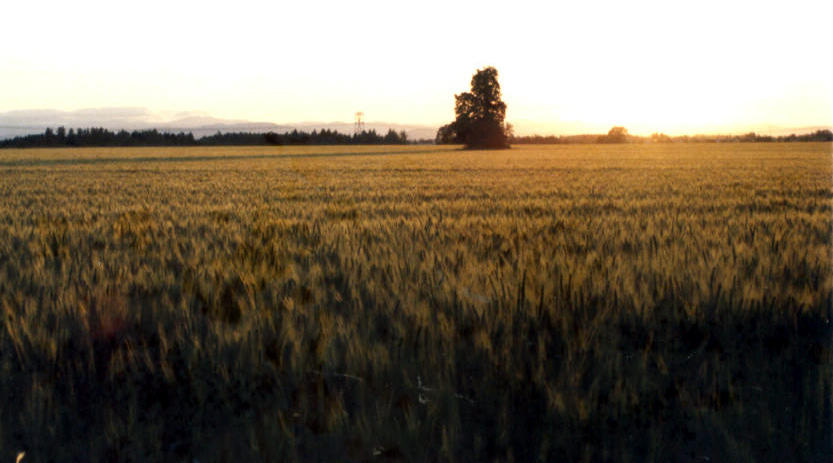
that splits the knowing fields of cultivated wheat
from the gods of chaos flinging by
toward bread & bluelight,
is to be divided, o citizen,
in half. For even I, the Self and Voice,
cannot decide which world to condemn
as one world ralleys forth with flags of righteousness
to pull like blankets out over the
breathing parts of the other.
O citizen, here is a bare spot,
come quickly and place your ear
here, as well. Learn the song of breath
before we decide otherwise.
press your ear to the fresh paved road
to hear how close the coming herd of gleaming chrome
has now approached.
They will be hungry when they arrive.
O citizen, to be alive upon the road
that splits the knowing fields of cultivated wheat
from the gods of chaos flinging by
toward bread & bluelight,
is to be divided, o citizen,
in half. For even I, the Self and Voice,
cannot decide which world to condemn
as one world ralleys forth with flags of righteousness
to pull like blankets out over the
breathing parts of the other.
O citizen, here is a bare spot,
come quickly and place your ear
here, as well. Learn the song of breath
before we decide otherwise.
Suburban Soliloquy #3
Signicantly, the shanty shacks of urban sprawl -
the tall, baby blue-beige or salmon stalls of sterile pleasure -
can be lifted from the suburbs of los angeles
to the urban curbs of new hampshire
and not suffer any crisis of identity.
So featureless! So perfectly blank!
Ah dearly beloved,
we are gathered here today
to totter about in nylon shirts
and designer shades.
the tall, baby blue-beige or salmon stalls of sterile pleasure -
can be lifted from the suburbs of los angeles
to the urban curbs of new hampshire
and not suffer any crisis of identity.
So featureless! So perfectly blank!
Ah dearly beloved,
we are gathered here today
to totter about in nylon shirts
and designer shades.
Sunday, July 31, 2005
Suburban Soliloquy #2
A hundred of you are hunched
tonight, masked in the blue-light
of the post atomic age.
What age is this?
A hundred of you have opened your eyes
like two holes for the electric blue eels of information
to slide in.
Your teeth glitter the news
when you smile.
I used to think that people who watched television
had no souls, but now I believe they do, and did
all along - my vision of beauty was just not strong
enough to see through the white noise.
A hundred of you tonight are singing
the songs of the dead from your sofa chairs.
In a million part harmony, disconnect.
When did the living learn the songs of the dead?
And with such youthful gusto they sing them!
tonight, masked in the blue-light
of the post atomic age.
What age is this?
A hundred of you have opened your eyes
like two holes for the electric blue eels of information
to slide in.
Your teeth glitter the news
when you smile.
I used to think that people who watched television
had no souls, but now I believe they do, and did
all along - my vision of beauty was just not strong
enough to see through the white noise.
A hundred of you tonight are singing
the songs of the dead from your sofa chairs.
In a million part harmony, disconnect.
When did the living learn the songs of the dead?
And with such youthful gusto they sing them!
Suburban Soliloquy #1
The people, yes,
and their cell-phones, yes,
raised at arms length,
up.
The people, glittering in nylon
twice upon the strong neck of
invisble money. Turning upward,
thinking, twisting upon
the trunk of industry,
craning their necks upward.
The internet cables connecting
tissue to tissue. Music rushing in with wind.
Wait. Listen.
The streets & the new roads &
the million acres of mirror-image
suburban boxes are raising
their hands to ask a question.
Who can answer them?
Who has the wisdom to parent
these children who cannot recollect
the scattered letters of their own name?
Scattered by wind, cemented over.
I held my hand out the window
at 45 miles an hour to catch the light while
O'Reilley's piano poured rainbows,
wet & bright, into my silvers car's interior.
I gulped & in that moment I knew what to tell
those children, young in bone
although immobile in the impossible
plastic safety-suit of the suburbs,
but then I blinked, a moment later,
and completely forgot.
and their cell-phones, yes,
raised at arms length,
up.
The people, glittering in nylon
twice upon the strong neck of
invisble money. Turning upward,
thinking, twisting upon
the trunk of industry,
craning their necks upward.
The internet cables connecting
tissue to tissue. Music rushing in with wind.
Wait. Listen.
The streets & the new roads &
the million acres of mirror-image
suburban boxes are raising
their hands to ask a question.
Who can answer them?
Who has the wisdom to parent
these children who cannot recollect
the scattered letters of their own name?
Scattered by wind, cemented over.
I held my hand out the window
at 45 miles an hour to catch the light while
O'Reilley's piano poured rainbows,
wet & bright, into my silvers car's interior.
I gulped & in that moment I knew what to tell
those children, young in bone
although immobile in the impossible
plastic safety-suit of the suburbs,
but then I blinked, a moment later,
and completely forgot.
Tuesday, July 26, 2005
McMenamin's Pubs
Mike McMenamin had this crazy idea: buy up a bunch of antique/quirky buildings in the Great Northwest and turn 'em into pubs. He started brewin' his own beer (the famed Hammerhead Amber Ale and the legendary Terminator Stout) roastin his own coffee, distillin' his Hogshead Whiskey, and grilling up a variety of mouth-watering barbeque burgers.
The Grand Lodge is an old Masonic Lodge which he and his cronies have converted into a Pub/Hotel. They hired a bunch of young scruffy monkeys to run the place. I am a scruffy monkey - willing to subject myself to the ignominy for a penny or two. Temporarily.
Always Temporarily.
My brother and I, in the meantime, have started a little business of mural painting. We've done 1 so far, but we are well on our way to 2. I promise. The 3rd job is out there beyond the horizon - I can feel it.
My mind is transitioning back into Think Phase. Note: it must take a lifetime to really understand oneself and the cyclical patterns of one's being. But in this postulated Think Phase, due to increased Thinkageness, I begin to once again ruminate words and concepts rather than images and ideas. (I just made a semantic division between concepts and ideas that I am too apathetic to make certain - I would only use dictionary.com anyway.)
The spirit of my imagination fluctuates between these two worlds. The creative engine of my art is sometimes lingual and sometimes experiential, imagistic - and it almost depends on this mood, or temperature, of the soul. Which in turn really depends on how good I am feeling about current experience - I am happy, awake, and hopeful? Or does that depend as well on this soul-temperature? What influences what - thats the question. Chicken or the egg. What is the first cause of the changes within me? Chemical? Can I know - can it be specified?
I sat in the dimming evening light back behind the Yardhouse Grill at the Grand Lodge and ate my BBQ Chicken Sandwhich, while ideas hovered like fireflies in the dark of my unverbalized and tired mind.
The Grand Lodge is an old Masonic Lodge which he and his cronies have converted into a Pub/Hotel. They hired a bunch of young scruffy monkeys to run the place. I am a scruffy monkey - willing to subject myself to the ignominy for a penny or two. Temporarily.
Always Temporarily.
My brother and I, in the meantime, have started a little business of mural painting. We've done 1 so far, but we are well on our way to 2. I promise. The 3rd job is out there beyond the horizon - I can feel it.
My mind is transitioning back into Think Phase. Note: it must take a lifetime to really understand oneself and the cyclical patterns of one's being. But in this postulated Think Phase, due to increased Thinkageness, I begin to once again ruminate words and concepts rather than images and ideas. (I just made a semantic division between concepts and ideas that I am too apathetic to make certain - I would only use dictionary.com anyway.)
The spirit of my imagination fluctuates between these two worlds. The creative engine of my art is sometimes lingual and sometimes experiential, imagistic - and it almost depends on this mood, or temperature, of the soul. Which in turn really depends on how good I am feeling about current experience - I am happy, awake, and hopeful? Or does that depend as well on this soul-temperature? What influences what - thats the question. Chicken or the egg. What is the first cause of the changes within me? Chemical? Can I know - can it be specified?
I sat in the dimming evening light back behind the Yardhouse Grill at the Grand Lodge and ate my BBQ Chicken Sandwhich, while ideas hovered like fireflies in the dark of my unverbalized and tired mind.
Wednesday, June 15, 2005
The Mirror & the Lamp
A quote:
"To Coleridge the threat of science to poetry lay, more profoundly, in the mistaken and unbounded metaphysical pretensions of atomism and mechanism--in Coleridge's view, a useful working hypothesis for physical research which had been illicitly converted first into fact, and then into a total worldview."
Los Angeles is singing her quiet wind-chrome song again in my deepest ears - Cloaked in the coils of darkness in my head, she is pressing her smallest and softest lips to my ear drum, and whispering.
"Knowledge! History! The Snake! The Sea Star!"
According to Bowra, who wrote "The Romantic Imagination" quoted in The Mirror and The Lamp, the romantic poets "agreed on one single point : that the creative imagination is closely connected with a peculiar insight into an unseen order behind visible things."
We say it a thousand times, but we must always be humbled. Honesty always always includes humility, little did Wittgenstein know.
"To Coleridge the threat of science to poetry lay, more profoundly, in the mistaken and unbounded metaphysical pretensions of atomism and mechanism--in Coleridge's view, a useful working hypothesis for physical research which had been illicitly converted first into fact, and then into a total worldview."
Los Angeles is singing her quiet wind-chrome song again in my deepest ears - Cloaked in the coils of darkness in my head, she is pressing her smallest and softest lips to my ear drum, and whispering.
"Knowledge! History! The Snake! The Sea Star!"
According to Bowra, who wrote "The Romantic Imagination" quoted in The Mirror and The Lamp, the romantic poets "agreed on one single point : that the creative imagination is closely connected with a peculiar insight into an unseen order behind visible things."
We say it a thousand times, but we must always be humbled. Honesty always always includes humility, little did Wittgenstein know.
Sunday, June 12, 2005
knowledge & poetry
Souls are interior landscapes haunted with beings, birds, beasts. Knowledge is the Red-Winged Blackbird of my soul - broken, black, humbled, faithful, cheerful. Poetry is the Red-tailed Hawk - longing, incomplete, hoping, distant. Both are beautiful - they temper my being with their songs, keep me from having a dishonest being. A dishonest being is an imbalanced being whose action results neither from faith (knowledge) nor hope (poetry) nor love. These beings do not have soul's justice - they have no justice in their action or relationships - they are mechanical, for they must be. Or something to this effect. Where is an image I can incarnate my idea in?
Ideas are very beautiful, because they have meaning, truth - they have consequences.
I think we should wear little nametag placards on our chests with either a Red-Winged Blackbird or a Red-Tailed Hawk to signify where we are at... remembering and sorting bring into the light - or pushing forward, exploring, into the haze. Discourse or prophecy.
Humble yourself in the sight of the unseen Lord.
Ideas are very beautiful, because they have meaning, truth - they have consequences.
I think we should wear little nametag placards on our chests with either a Red-Winged Blackbird or a Red-Tailed Hawk to signify where we are at... remembering and sorting bring into the light - or pushing forward, exploring, into the haze. Discourse or prophecy.
Humble yourself in the sight of the unseen Lord.
Thursday, June 09, 2005
New Sheperd Poem
Sometimes after the sun's scheduled departure
I am still sitting in a chair
staring at the coffee table
counting words & I find
that the surface of my eyes
becomes suddenly slick.
Then, when I reach for the hood of my sweatshirt
to signify to myself the curtain's daily closing
on my mind, I find, often, a soft lump
nuzzled in the hood's folds.
Once I pulled the hood over despite,
spending the entire night with a feathered body
warming my pate. By morning
he'd dissolved & I sang strange songs that day.
Most times I will lift him out
& sit awhile longer,
holding him lightly on my lap,
extending a wing, gently, with my fingertips.
I am still sitting in a chair
staring at the coffee table
counting words & I find
that the surface of my eyes
becomes suddenly slick.
Then, when I reach for the hood of my sweatshirt
to signify to myself the curtain's daily closing
on my mind, I find, often, a soft lump
nuzzled in the hood's folds.
Once I pulled the hood over despite,
spending the entire night with a feathered body
warming my pate. By morning
he'd dissolved & I sang strange songs that day.
Most times I will lift him out
& sit awhile longer,
holding him lightly on my lap,
extending a wing, gently, with my fingertips.
Subscribe to:
Posts (Atom)